
7 TYPES OF WINDOW FILM: WHICH ONE IS RIGHT FOR YOU?
Relentless sun, rising indoor temperatures, and close-proximity living have made untreated windows a growing problem for many homes and offices across Singapore. Harsh glare, excessive heat build-up, fading interiors, and privacy concerns are no longer occasional annoyances. They are daily challenges in a tropical climate.
Window film has emerged as one of the most practical upgrades for managing these issues without sacrificing natural light. However, not all types of films are designed for the same purpose. A homeowner trying to cool a west-facing bedroom requires a vastly different solution from a retail business looking to reinforce branding and customer privacy at the storefront.
That is where the choice gets interesting, and where most property owners get stuck. The right film depends on your sun exposure, privacy needs, the look you want, and how much you are willing to spend.
Knowing the different types of window film, what each is built for, and where each performs best, is the right way to narrow down the ideal fit. It also helps avoid paying for performance you do not actually need.
HOW WINDOW FILMS ACTUALLY WORK
Modern window films are sophisticated, multi-layer laminates engineered to enhance glass performance. Far beyond the simple tints of the past, quality films are designed to improve heat control, UV protection, privacy, and safety without replacing the glazing itself.
Inside a typical film, these core layers do most of the work:
- Polyester Base Layer: The structural backbone of most films is a polyester (PET) sheet. It provides the strength, dimensional stability, and visual clarity that everything else builds on. Higher-end films often use multiple polyester plies bonded together for added durability.
- Functional Layer: This is the working core of the film. Depending on the product, it can contain UV inhibitors, dyed colorants, sputtered metals, or non-conductive ceramic particles. This layer determines whether the film blocks heat, absorbs UV, reflects glare, or simply adds color.
- Adhesive Layer: A specialized pressure-sensitive adhesive bonds the film to the inside surface of the glass. Many adhesives also contain UV blockers, giving the film a second line of defense against ultraviolet damage.
- Scratch-Resistant Top Coat: A durable, hard coat sits on the room-side surface, protecting the film from cleaning and everyday wear.
The number, thickness, and composition of these layers determine the difference between a basic dyed tint and a better, premium ceramic or safety film. Different combinations create varied outcomes, which is exactly what defines the various types of window film available in the market, including 3M options.
THE MAIN TYPES OF WINDOW FILM
Window film comes in several distinct categories, each engineered around a different priority.
1. SOLAR CONTROL FILM
Solar control film is one of the most popular types of window film, designed to reduce solar heat gain by rejecting infrared energy before it enters the room. It pairs that thermal performance with UV blocking, helping reduce interior temperatures, lower cooling costs, and protect furnishings from sun-related fading.
- Heat Rejection: High-performing solar control films can block up to 79% of solar heat, depending on grade and shade level.
- UV Protection: High-quality solar films block up to 99% of UV rays.
- Glare Reduction: Lower visible light transmission cuts the harsh glare that makes screens hard to read.
- Range of Finishes: Available in options from lightly tinted to deeply reflective to match the look you want.
2. CERAMIC FILM
Ceramic film is the premium upgrade within the solar control family, using nano-ceramic particles instead of metal or dye to deliver high heat rejection. The result is a clear, neutral-looking finish that performs without drawing attention to itself.
- High Heat Rejection Without Heavy Tinting: Ceramic particles efficiently block infrared energy, even in lighter shades.
- Signal-Friendly: Non-metallic construction means no interference with mobile signals, Wi-Fi, or GPS.
- Color Stability: Ceramic films resist fading and discoloration far longer than dyed alternatives.
- Low-Glare Appearance: Minimal mirror-like reflection on the exterior, preserving the look of the glass.
3. PRIVACY FILM
Privacy films are thin materials applied directly to glass surfaces to reduce visibility while still allowing light to enter the space.
- Daytime View Control: Reflective privacy films use differences in interior and exterior light levels to reduce inward visibility during daylight hours while preserving outward views.
- Two-Way Obscuring: Frosted and blackout films block visibility from both directions, regardless of the time of day.
- Natural Light Preservation: Many privacy films maintain brightness while reducing direct lines of sight.
- Mirror or Matte Options: Available in mirrored, frosted, semi-opaque, and fully blackout finishes.
4. DECORATIVE FILM
Decorative film is designed to enhance the appearance of glass while adding varying levels of privacy, style, and visual customization. Available in a wide range of finishes and customizable styles, this type of film allows residential and commercial spaces to transform ordinary window glass into both a practical and visual feature.
- Diffused Light: Frosted finishes scatter incoming light, keeping rooms bright while obscuring the view.
- Pattern and Gradient Choices: Available in etched-glass styles, geometric designs, textured finishes, and opacity gradients to suit a wide range of preferences.
- Custom Branding: Logos, slogans, and brand-specific graphics can be cut or printed directly onto the film.
- Low-Disruption Refresh: Improved the glass’s appearance without replacing the panel.
5. SAFETY AND SECURITY FILM
Safety and security film is a thicker, multi-ply product engineered to hold glass together under stress. While it does not make glass unbreakable, it changes how glass behaves when broken.
- Impact Resistance: Heavier grades absorb force from accidental knocks, falls, or attempted forced entry.
- Shard Containment: Broken glass remains bonded to the film rather than shattering across the floor.
- Discreet Appearance: Most safety films are clear once installed, with no impact on daylight or visibility.
- Range of Thicknesses: Standard 4-mil films focus on injury prevention; 8-mil and above are used for security-grade applications.
6. LOW-EMISSIVITY (LOW-E ) FILM
Low-E film is engineered to improve the thermal insulation of glass by reflecting long-wave infrared energy back toward its source.
- Two-Way Insulation: Reflects radiant heat in both directions, blocking incoming heat and reducing aircon loss.
- Clarity-First Design: Most Low-E films are nearly clear, retaining light and outward views.
- Energy Efficiency: Lowers cooling loads, particularly in older buildings with single-pane or basic double-glazed windows.
- All-Climate Performance: Effective in both tropical and air-conditioned environments year-round.
7. DYED FILM
Dyed or colored film is the entry point to the window film market, working primarily by absorbing rather than reflecting solar energy. It costs less than ceramic or Low-E options and is widely chosen for applications where a basic level of heat and glare control is sufficient.
- Affordability: The most accessible price point in the window film category.
- Light Heat Reduction: Modest infrared rejection through absorption rather than reflection.
- Color Options: Available in a wide range of tints, including bronze, gray, smoke, and charcoal, making it one of the more flexible picks among the different types of window film on the market.
- Decorative Use: Color variants are also chosen for accent walls, partitions, and aesthetic styling.
COMMON APPLICATIONS OF WINDOW FILMS
A single window film type can be used across different settings. The right pick is usually the one whose performance characteristics line up most closely with the actual problem on the glass.
1. HEAT CONTROL IN SUN-FACING ROOMS
Problem: North-west and south-west rooms catch hours of direct afternoon sun, turning living areas into ovens and forcing aircon to work harder for less effect. Corner offices and full-height glazing encounter the same issue at commercial scale, with the added cost of higher cooling bills on larger floor plates.
Best Fit: Solar control and ceramic films are the ideal type of window tints. Ceramic is preferred when strong heat rejection is required without darkening the room. Reflective solar film is the better choice where maximum heat blockage outweighs a slight loss of light, particularly on glazing that takes the worst of the afternoon sun.
2. DAYTIME PRIVACY IN LIVING SPACES AND BATHROOMS
Problem: Ground-floor flats, corridor units, and street-level shop offices all share the same issue: people can see straight in. Curtains and blinds solve the visibility problem, but they also block the light that made the space feel open in the first place.
Best Fit: Privacy film handles both at once. Reflective privacy film suits windows facing open corridors or balconies, where daytime privacy and outward views both matter. Frosted privacy film fits bathroom, toilet, and bedroom windows where two-way visibility blocking is needed at all hours.
3. AESTHETIC BRANDING FOR STOREFRONTS AND OFFICE INTERIORS
Problem: Glass facades and internal partitions are among the most visible surfaces a brand owns, yet most go unused. Plain glass blends into the background, and traditional signage is slow and expensive to update.
Best Fit: Decorative film turns glass into design real estate. Storefronts use printed and frosted decorative films for logos, opening hours, promotional graphics, and brand storytelling. Inside offices, frosted gradients and etched-glass effects on partitions and meeting-room doors deliver a polished finish that doubles as branding without sacrificing the open-plan feel.
4. UV PROTECTION FOR FURNITURE, FLOORING, AND ART
Problem: Interior sun damage often goes unnoticed until fading becomes visible, by which point sofas, rugs, hardwood flooring, or valuable furnishings may already be affected. Artwork, designer pieces, and stocked retail goods face the same risk, especially in spaces where light is still desirable.
Best Fit: UV-blocking films are the ideal type for homes with large windows, art collections, designer furniture, or premium flooring, as well as galleries, showrooms, and luxury retail spaces where preserving interiors and valuable displays is essential.
5. GLASS REINFORCEMENT FOR SAFETY AND SECURITY
Problem: Glass is everywhere in modern buildings, and it is easy to break. A child colliding with a glass door, tropical storm debris, or an attempted forced entry can all turn a pane into a serious hazard within seconds.
Best Fit: Safety and security films are commonly used in ground-floor retail outlets, banks, jewelry stores, offices, and residential properties where added glass protection and occupant safety are priorities.
6. ENERGY EFFICIENCY IN AIR-CONDITIONED BUILDINGS
Problem: Air-conditioning is one of the largest line items on a Singapore utility bill, and glass is one of the largest leak points. Heat pours in through untreated panes during the day, and conditioned air bleeds out through the same surfaces at night.
Best Fit: Low-E and high-grade solar films work as a thermal envelope, keeping cool air inside and radiant heat outside.
7. GLARE-FREE WORKSTATIONS AND TECH-HEAVY OFFICES
Problem: Screen glare is one of the most overlooked productivity drains in modern offices, forcing tilted monitors, lowered blinds, and tired eyes by mid-afternoon. Older metallic solar films make it worse, since their construction can interfere with Wi-Fi, mobile signals, and wireless equipment.
Best Fit: Ceramic films are the favored fit for tech-heavy environments because they cut glare without any metallic interference. Films with strong glare control make screens easier to read and reduce eye strain across long working days. The same benefits apply to home offices in HDB flats and condos, where placing a router near a window is common.
WINDOW FILMS FOR HOMES VS. COMMERCIAL SPACES
Most window film types serve both residential and commercial buyers, but the priorities behind each purchase tend to differ significantly.
Homes are typically about comfort, family wellbeing, and long-term savings. Commercial spaces are usually about performance metrics, brand presentation, and risk management. The best film for each setting is the one that aligns with its set of priorities.
1. RESIDENTIAL PROPERTIES
For HDB flats, condominiums, and landed homes, sun protection, soft daytime privacy, and fade prevention typically rank higher than commercial-grade safety reinforcement.
- Heat and UV Control for Living Areas and Bedrooms: Solar control or ceramic films for west- and south-facing rooms are among the most popular residential upgrades.
- Privacy for Bathrooms, Bedrooms, and Corridor-Facing Windows: Frosted and reflective window film options suit different areas of the home based on visibility needs and time of day.
- Energy Efficiency for Aircon-Heavy Households: Low-E or premium solar films deliver lower cooling bills over the long term.
- Tenant-Friendly Aesthetic Upgrades: Removable decorative films allow renters to personalize HDB or condo windows without permanent modifications.
2. COMMERCIAL SPACES
Offices, retail outlets, and mixed-use commercial properties bring a different set of demands. Glass surfaces are usually larger, foot traffic is higher, and brand presentation, employee productivity, and risk exposure all factor into the brief.
- Glare and Energy Management for Large Facades: High-performance solar and Low-E films keep workstations comfortable and reduce strain on cooling systems across full-height glazing.
- Privacy and confidentiality for Meeting Rooms and Partitions: Frosted, gradient, and dual-reflective films create discreet workspaces while preserving an open, modern feel.
- Branded Storefront and Shopfront Treatments: Decorative films, custom prints, and perforated graphics turn glass facades into marketing real estate.
- Reinforcement for Ground-Floor and High-Risk Premises: Security-grade safety films are common for retail, banking, and customer-facing premises where forced entry is a real concern.
CHOOSING THE RIGHT WINDOW FILM FOR YOUR SPACE
Choosing the right type of window film depends on several factors, including your primary goals, window orientation, property type, and the specific performance features your space requires.
1. START WITH YOUR PRIMARY GOAL
The first step is identifying the primary issue you need the window film to address, whether that is excessive heat, rising cooling costs, lack of privacy, safety concerns, UV exposure, or design requirements.
Most spaces have a primary and a secondary goal, and the strongest window film options address the primary goal while still supporting the secondary.
2. CONSIDER THE ORIENTATION OF YOUR WINDOWS
Window orientation plays a major role in determining how much direct sunlight, heat, glare, and UV exposure your glass receives throughout the day, which directly affects the type of window film best suited to the space. Considering window direction, sun intensity, and how each room is used helps ensure the chosen film delivers the right level of performance.
3. FACTOR IN YOUR SPACE TYPE AND USAGE
The type of space and how it is used are important factors when evaluating window film requirements. Residential, commercial, and retail environments often have very different priorities, so it is essential to consider who uses the space, how the glass functions within it, and what performance gaps currently need to be addressed.
4. CHECK COMPATIBILITY WITH YOUR GLASS TYPE
Not every window film is compatible with every type of glass, making glass composition an important consideration before installation.
Factors such as tempered glass, double-pane units, laminated systems, older glazing, and specialty coatings can all influence film suitability and performance. Older buildings, custom glazing, and non-standard glass setups often require closer evaluation to avoid compatibility issues and ensure long-term durability.
5. GET PROFESSIONAL CONSULTATION
Professional consultation from window film specialists, such as Wrapworks, can help prevent costly mistakes by ensuring the selected film aligns with your glass type, property requirements, and performance goals. Expert assessment improves compatibility, installation quality, and long-term performance.
WINDOW FILM INSTALLATION AND AFTERCARE
Even the best window film delivers its performance only when it is paired with proper installation and consistent care over time.
THE INSTALLATION PROCESS
A residential installation takes a few hours per room, with most of that time spent on glass preparation rather than on the film itself. Quality installers work in dust-controlled conditions, use specialized tools, and follow a proper sequence to avoid bubbles, contamination, or edge lift.
- Glass Preparation: Each pane is thoroughly cleaned to remove dust, residue, and other contaminants that could otherwise cause bubbling or adhesion failure.
- Precision Film Cutting: The film is measured and cut to the exact dimensions of the glass, with allowances made for the bezel and frame.
- Wet Application and Squeegee: A specialized application solution lets the installer position the film cleanly before squeegeeing out moisture for a smooth finish.
- Curing Period: Most films need a few days to a few weeks to fully bond, during which a small amount of moisture haze or pinpoint bubbling is normal and clears as the film dries.
The lifespan of window film depends heavily on film quality, sun exposure intensity, and installation process. For instance, when properly applied, high-quality commercial films by Wrapworks typically last around 3 to 5 years, while our higher-grade solar films can last up to 10 years with proper care.
CLEANING AND MAINTENANCE TIPS
Proper cleaning and routine care are essential to preserving the appearance, performance, and lifespan of professionally installed window film.
- Wait Out the Curing Period: Avoid cleaning the film for at least 30 days after installation to allow the adhesive to fully set.
- Use Soft Cloths or Microfiber: Rough materials, paper towels, and abrasive sponges scratch the surface and can leave permanent marks.
- Stick to Mild, Non-Ammonia Cleaners: Ammonia can degrade the adhesive and discolor the film over time. A mild soap-and-water mix or a film-safe glass cleaner is best.
- Avoid Sharp Tools at All Costs: Razors, scrapers, and stickers should never be used on filmed surfaces.
Beyond that, a once-yearly inspection by a certified installer is worth scheduling for any high-value commercial install, just to catch edge lift or wear early.
MAKING THE RIGHT WINDOW FILM CHOICE WITH WRAPWORKS
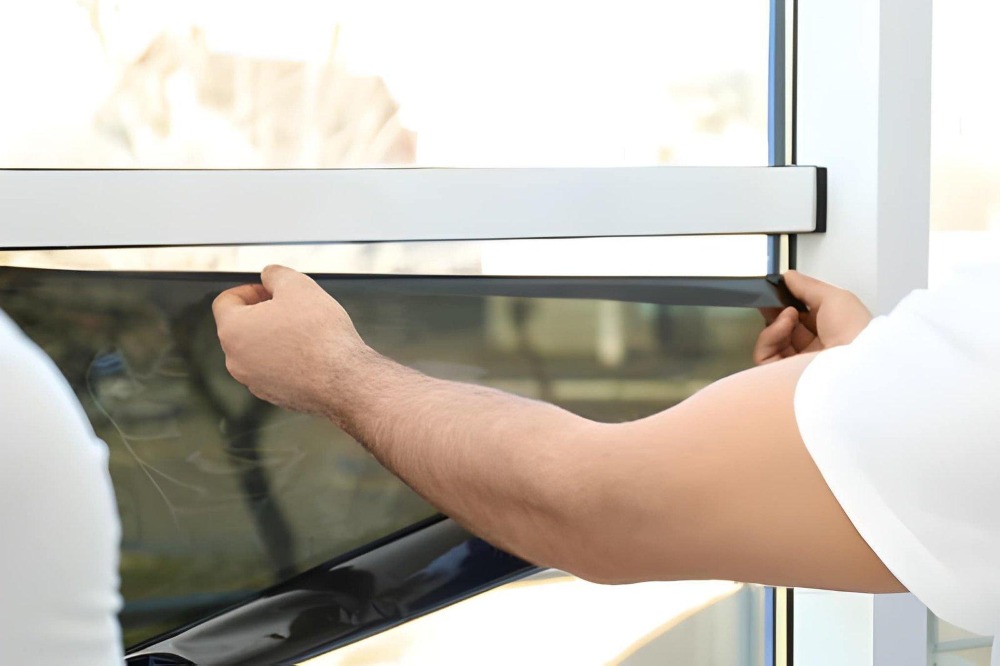
Choosing the right type of window film is only part of the investment. Installation quality plays an equally critical role in determining how well the film performs, how long it lasts, and whether product warranties remain valid.
This is where Wrapworks adds value through professional workmanship, certified expertise, and a service-first approach. As 3M-certified applicators, our team meets internationally recognized installation standards and uses manufacturer-approved materials to ensure consistent, reliable results across residential, commercial, and automotive window-film projects.
With over a decade of hands-on experience in window films, car wraps and door wrapping services, you benefit from skilled applicators who focus on precision, careful window film installation, and long-lasting finish quality.
Beyond installation, we also place strong emphasis on customer care and after-sales support. You can feel confident knowing that guidance, maintenance assistance, and support remain available even after the project is completed, ensuring the film continues to perform well over time.
To get expert advice on the right window film for your space, contact us for a professional consultation today.