
WHAT IS A CAR WRAP? EVERYTHING YOU NEED TO KNOW
Ever looked at your car and felt the factory color no longer reflects your style, or wished you could switch things up without committing to a permanent respray?
Maybe you are leasing a vehicle and want a bold new look while still protecting the original paint, or perhaps you are a business owner aiming to turn every journey into a branding opportunity with a moving advertisement. In all these scenarios, car wrapping offers a practical and highly flexible solution.
A car wrap transforms a vehicle’s appearance through a color change, custom design, or branded graphics without altering the original paintwork. Unlike traditional paint jobs, vinyl is fully reversible, offering an expansive range of finishes and textures.
The final result, however, depends on the quality of materials used and, just as importantly, the skill and precision of the installer, which is why professional application is essential for a long-lasting finish.
WHAT DOES WRAPPING A CAR MEAN?
A car wrap is a thin, durable vinyl film applied directly over a vehicle’s original paintwork to change its color, finish, or design. It functions like a large, fitted, removable sticker, engineered to withstand heat, UV, and the weather cars are regularly exposed to throughout the year. Some people refer to it as a vehicle wrap, particularly in commercial fleet contexts, but the product and process are the same.
One thing to note is that the vinyl does not replace the paint. It sits on top of it, conforming to every panel, curve, and recess. The factory finish stays untouched underneath, shielded from sun, road grit, and minor abrasions, while the surface anyone sees is the vinyl.
KEY ASPECTS OF CAR WRAPS: WHAT YOU NEED TO KNOW BEFORE YOU START
Before deciding to wrap a car, it is important to understand the key factors that influence the final result, durability, and the investment’s value. Car wrapping is not just about changing appearance; it involves a process, different material options, maintenance requirements, and cost considerations.
THE PROCESS
Wrapping a car is a multi-stage process that takes anywhere from a few hours for a small partial wrap to two or three days for a full vehicle wrap. Most of that time is spent on preparation rather than the application itself.
1. SURFACE PREPARATION
The durability of the car wrap depends on how well the surface of the car is prepared before installation.
- Cleaning: The vehicle is washed thoroughly, and an alcohol-based solution is used to strip wax, sealants, and any residue left by the wash. The surface is then dried completely before any vinyl touches the paint.
- Removing Fine Particles: Most quality installers also use compressed air to clear any remaining particles from panel gaps and edges, since even fine grit can show through the film once applied.
- Partial Disassembly: Bumpers, side mirrors, lights, and certain body panels may be partially disassembled so the vinyl can be applied right up to the edges for a cleaner, seam-free finish.
2. MEASURING, CUTTING, AND APPLYING THE VINYL
Each panel of the vehicle is measured separately, and the vinyl is cut to match before it is applied.
- Heat application for Flexibility: A heat gun is used throughout the application to soften the film, allowing it to stretch and conform to curved or recessed surfaces without creasing or lifting.
- Smoothing and Air Removal: The installer works the film into shape with a soft felt squeegee, pushing out air pockets and ensuring the vinyl lies flat and smooth against the paintwork.
- Skill-Dependent Installation: This is the stage where skill really matters, because curved areas like bumpers, mirrors, and door handles are difficult to work with, and mistakes are easy to spot.
3. FINISHING AND POST-INSTALLATION
Once the panels are wrapped, the finishing of the car wrap begins.
- Edge Trimming: Excess vinyl is cut away around lights, grilles, door seams, and other detailed areas for a clean finish.
- Edge Sealing with Heat: Edges are reheated to set the adhesive and reduce the risk of lifting over time, especially in areas exposed to wind or repeated movement.
- Curing period: A curing period follows the installation, allowing the adhesive to fully bond with the paint surface.
- Aftercare instructions: Owners are usually advised to avoid washing the car or exposing it to heavy rain for the first 72 hours, depending on the wrap used.
TYPES OF CAR WRAPS
Wraps are grouped by how much of the vehicle they cover and what they are intended to achieve. The right choice depends on whether you want a full new look, a small design change, a color update, or a branded advertising wrap for your vehicle.
1. FULL WRAP
A full wrap covers the entire exterior of the vehicle, including side mirrors, bumpers, door jambs, and every body panel. It is the best option for those who want an end-to-end transformation with no original paint visible at any angle.
Full wraps also offer the highest level of paint protection across the vehicle. That makes them a popular choice for owners who want to preserve the factory finish and maintain resale value at the end of the Certificate of Entitlement (COE) cycle.
2. PARTIAL WRAP
A partial wrap targets specific sections of the vehicle, such as the hood, roof, side panels, or a single feature line, rather than covering the entire surface. The approach is a cost-effective way to add visual contrast and personality without a full transformation.
Wrapped sections often pair against the existing paint color for a clean two-tone effect. Partial wraps are also a practical solution for refreshing or concealing isolated areas of faded or damaged paintwork.
3. COLOR CHANGE WRAP
A color change wrap is a full-vehicle application chosen specifically to replace the car’s current color with an entirely different shade or finish. This is one of the most common reasons owners choose to wrap rather than respray.
The main benefit is reversibility. Unlike a paint job, a color change wrap can be removed at any time to reveal the original factory paint underneath. For leased vehicles or for owners who like to refresh their car’s look every few years, that flexibility is an important practical advantage.
4. CUSTOM GRAPHICS AND ADVERTISING WRAP
Custom graphics and advertising wraps use printed vinyl featuring company logos, promotional messaging, artistic designs, or fully custom imagery applied across part or all of the vehicle. They are popular among businesses looking to turn their fleet into a mobile advertising platform that builds brand visibility wherever the vehicles go.
At Wrapworks, we handle custom graphic design, printing, and on-site installation as part of our end-to-end service, keeping the process from concept to completion under one roof.
DURABILITY
A professionally installed car wrap, when properly maintained, can typically last between 3 and 7 years. The exact lifespan depends on factors such as environmental conditions, how often the vehicle is used, and where it is usually parked.
When it comes to the durability of the wrap, the finish type also matters. Chrome and color-shift wraps usually last on the lower end of the lifespan because their special layers are more sensitive to heat and UV exposure. Gloss and satin finishes generally hold up better over time, and high-quality vinyl can last a few years longer than cheaper options.
PROTECTION AND MAINTENANCE
Getting the most out of a car wrap comes down to consistent maintenance after installation. The vinyl is durable, but it is not indestructible, and a few habits will make the difference between a wrap that looks new at year five and one that looks tired by year three.
1. WASHING
Hand-washing is the safest and most effective method for cleaning a wrapped car.
A pH-neutral car wash solution and soft microfiber cloths clean the surface without scratching the vinyl. Automatic car washes with stiff bristles or abrasive brushes should be avoided, since they can easily scratch, lift, or tear the wrap, particularly along edges.
Regular rinsing also helps prevent staining from dust, bird droppings, and tree sap if contaminants are left untreated for long.
2. PARKING AND SUN EXPOSURE
Parking in a sheltered or covered location helps preserve the wrap. Singapore’s tropical climate is hard on any vehicle finish, and prolonged direct sun accelerates fading and weakens the adhesive over time. For vehicles that cannot be garaged, a quality car cover is a practical alternative.
3. AVOIDING HARSH PRODUCTS
Ammonia-based cleaners, solvent-heavy products, and standard car wax not formulated for vinyl should all be avoided. These can strip the film’s protective coating and degrade the surface over time.
Vinyl-safe sealants and detailers are widely available and worth using if you want to keep the finish looking fresh.
4. ADDRESSING DAMAGE PROMPTLY
Chips, lifted edges, or surface damage on the car should be attended to as soon as they are noticed. Minor damage to a section of the wrap can often be repaired without replacing the entire film, provided it is addressed promptly by a professional.
Left unaddressed, a small lifted edge can spread across an entire panel within weeks, particularly in heat.
COST
Pricing for a quality wrap varies widely based on vehicle size, wrap type, finish complexity, and installer reputation. A small partial wrap is on the lower end of the range, while a full wrap in a complex finish, such as chrome or color-shift on an SUV, is on the higher end.
It is worth being cautious with very low quotes. Lower-grade vinyl can peel, fade, wrinkle, and experience adhesive failure much sooner than premium films, and a poorly installed wrap can become costly to correct or remove.
In most cases, a professional installation using reputable materials proves more cost-effective over the life of the vehicle, even if the initial investment is higher.
TYPES OF VINYL FINISHES: CHOOSING THE LOOK THAT IS RIGHT FOR YOU
Car wraps are available in a wide range of finishes, each delivering a distinct visual character. The finish you choose has as much impact on the final result as the color itself. It also affects how the wrap behaves over time, how it reflects light, and how forgiving it is of daily wear.
1. GLOSS
Gloss is the most widely chosen finish, delivering a shiny, paint-like appearance that suits almost any vehicle and color choice. It is relatively easy to maintain and produces a clean, polished result that looks particularly striking in bold, saturated colors. For owners who want their wrap to read as factory paint at first glance, gloss is the default starting point.
2. MATTE
Wraps with matte finishes eliminate surface reflection, giving the vehicle a flat, understated look that has become increasingly popular among enthusiasts and luxury car owners.
The aesthetic is restrained and modern, but the maintenance is slightly more demanding as matte wraps show water spots and fingerprints more readily than gloss alternatives. If you choose matte, be prepared for more frequent cleaning.
3. SATIN
Satin sits in the middle ground between gloss and matte, offering a sheen that is neither fully reflective nor completely flat. The result is a refined and distinctive appearance that has become a favorite for high-end and sports vehicles.
It hides fingerprints better than matte, and its softer light reflection emphasizes body lines without the harshness of full gloss.
4. CHROME AND METALLIC
Chrome and metallic wraps are the most visually striking options, delivering a mirror-like or color-shifting effect that draws significant attention. They are also the most technically demanding to install because the film is heat-sensitive and tends to dull or crease when overstretched.
Professional installation is non-negotiable for chrome finishes, since the margin for error is much smaller than with gloss or matte.
5. COLOR-SHIFT
Color-shift finish, sometimes called chameleon finish, changes apparent color depending on viewing angle and light. These wraps are designed with multiple layers of specialized pigments or microscopic flakes that shift between different hues, such as green to gold, blue to purple, or red to orange, as light hits them differently, creating a dynamic, pearlescent, or metallic appearance.
6. TEXTURED
Car wraps with textured finishes, such as carbon fiber and brushed metal, replicate the look and feel of premium materials, adding depth and a performance-inspired aesthetic. The most common use is for accents such as hoods, roofs, and interior trims, but they can also be applied to larger sections for a bold, distinctive finish.
WHAT CONDITION DOES YOUR CAR NEED TO BE IN BEFORE WRAPPING?
Before a car can be wrapped, its surface condition plays a key role in how well the vinyl will stick and how smooth the final finish will look.
Even though wraps can transform appearance, they do not hide major paint issues or surface defects in the car. Vinyl conforms tightly to whatever lies beneath it, so any imperfections on the original surface have a way of showing through.
Getting the car into the right condition before installation is essential to ensure a clean, long-lasting result.
- Paint Quality: The factory or repainted finish should be in sound condition, with no peeling clear coat, oxidation, or fading. Wraps applied over compromised paint can pull lifting paint away when removed, creating a far bigger repair job than the original cosmetic issue.
- Dents and Scratches: Visible dents, deep scratches, and creases will show through the vinyl once applied. Any damage should be repaired with panel beating or paint touch-ups before the wrap is applied.
- Rust and Corrosion: Any rust, particularly along edges, wheel arches, or door bottoms, must be treated and repainted before wrapping. Vinyl over rust traps moisture and accelerates the corrosion underneath.
- Surface Cleanliness: The car must be thoroughly cleaned before wrapping. Dirt, wax residues, polishing compounds, and other contaminants must be fully removed so the vinyl bonds properly and lasts as long as possible.
CAR WRAP VS. PAINT JOB: HOW DO THEY COMPARE?
When deciding between a car wrap and a traditional paint job, it helps to understand how they differ in cost, flexibility, appearance, and long-term benefits. Both options can transform a vehicle, but they serve different needs and offer distinct advantages depending on your goals.
1. COST
A budget paint job will typically cost less than a quality car wrap. A professional multi-coat respray, finished to a high standard, often costs the same as or more than a full premium wrap.
The difference becomes more pronounced with specialty finishes, such as matte, satin, color-shift, and chrome effects. These are significantly more expensive to achieve through paint than through vinyl. For these looks specifically, car wrapping is often the more economical route.
2. REVERSIBILITY
This is the most important difference between the two options.
A wrap can be fully removed without affecting the original paint, provided the vehicle was properly maintained and the wrap was installed and removed by a professional. A paint job permanently alters the vehicle’s surface and cannot be reversed without repainting.
If you have a leased vehicle and need to return the car in its original condition, reversibility is a decisive factor. The same consideration applies to those who like the freedom to refresh their car’s look every few years.
3. APPEARANCE OPTIONS
Both car wrap and paint offer a wide range of colors and finishes. Specialty looks such as matte, satin, chrome, color-shift, and custom printed graphics, however, are more achievable and affordable through wrapping than through paint.
A skilled paint shop can replicate most of these, but the cost rises sharply, and the results are not reversible if the look does not work out.
4. PAINT PROTECTION
A car wrap provides an added layer of protection over the factory paint, shielding it from UV rays, minor abrasions, and everyday environmental contaminants. This helps keep the original paint in better condition over time, which can support the vehicle’s resale value.
A standard paint job does not offer this protective layer.
IS A CAR WRAP REMOVABLE? WHAT HAPPENS WHEN YOU TAKE IT OFF?
Car wraps are designed to be removable, allowing you to revert to the original paint or change to a new design at any point. Removal is generally straightforward when the wrap has been properly maintained and has not been left on beyond its recommended lifespan.
A skilled installer peels the vinyl away cleanly using controlled heat, and any adhesive residue is removed with a specialist solution before the paint surface is detailed and inspected.
Problems usually happen when wraps are left on the car too long, especially in strong sunlight. After a few years, the adhesive can bond more tightly to the clear coat, making removal slower, harder, and more costly. High-quality films from trusted brands usually come off cleanly even after several years. Most removal issues stem from low-quality wraps kept beyond their intended lifespan.
Working with a professional installer such as Wrapworks matters here, as we will use materials engineered for clean removal and will advise on the timing of replacement before the adhesive becomes problematic.
TRANSFORM YOUR VEHICLE WITH CAR WRAPS FROM WRAPWORKS
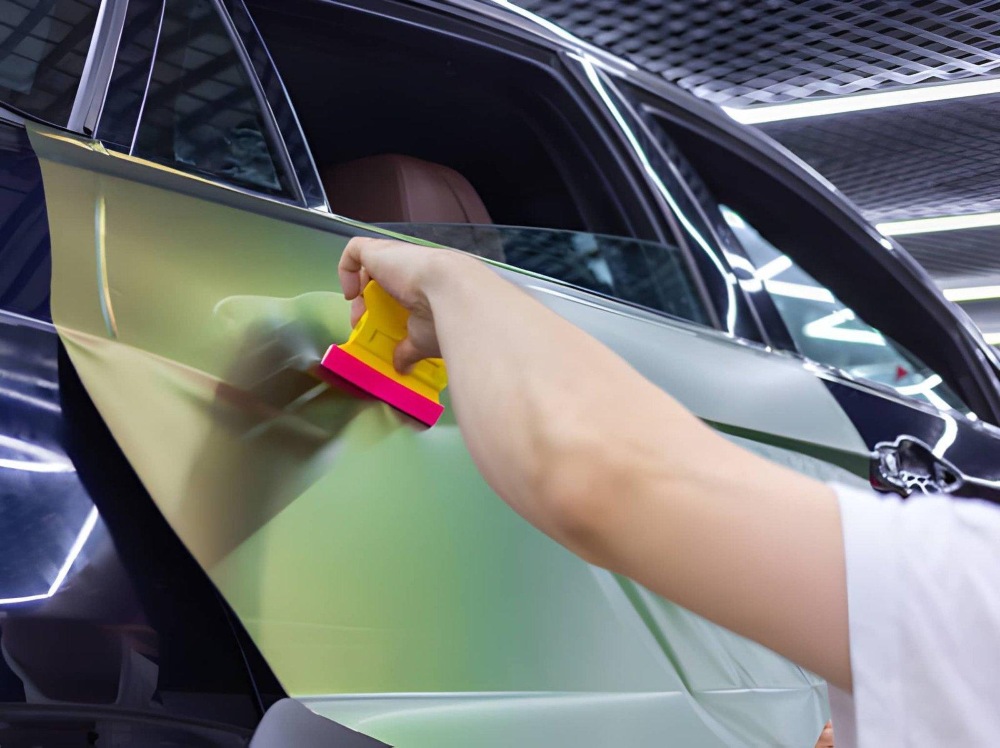
Poor installation can lead to visible bubbles and creases, peeling edges, incorrect heat application that may warp the film, and misaligned cuts that leave uneven gaps around panel edges. These issues not only affect the appearance of the car but can also reduce the lifespan of the wrap.
In contrast, a skilled and experienced installer such as Wrapworks can help achieve a cleaner, smoother, and longer-lasting finish. Our team focuses on careful application and consistent workmanship, ensuring each vehicle is handled with attention to detail for a professional result.
As a 3M-certified applicator, we use premium materials and adhere to high installation standards. In addition, we provide dedicated after-sales maintenance support to help keep your wrap in good condition.
In addition to our car wrapping service, we provide door wrapping service and solar film for windows in residential and commercial spaces, helping you enhance both style and protection across a range of applications.
If you are considering a car wrap, get in touch with us today to discuss your vehicle, your requirements, and the most suitable wrap solution for your needs.